
Gate Materials & Options Comparison
Salt air, strong sun, daily summer storms and the odd hurricane decide how a gate ages here more than anything else. This page puts the five common materials and the main gate types side by side.
Why the climate decides
In a dry inland climate almost any gate material lasts. Here it is different. Salt carried on the Gulf breeze settles on everything west of US 41 and well beyond it, and it attacks bare steel within months. The sun is strong all year, which fades paint and stain and makes some plastics brittle. From mid-May to mid-October most of the year's rain falls in afternoon storms, so wood stays damp and termites stay busy. And from June through November a hurricane can put a strong wind load on any solid gate.
So the first questions are how close the property is to the water and how much upkeep you want to do. The table below answers the rest. Cost levels compare the materials with each other for a gate of the same size; they are not prices.
Material comparison
| Material | Cost level | Coastal-climate durability | Maintenance | Lifespan | Best use |
|---|---|---|---|---|---|
| Aluminum | Moderate | Excellent: does not rust; powder coat protects the color | Low | Long; the coating ages first | Most driveway gates near the coast |
| Wrought iron | Highest | Poor to fair: rusts wherever the coating chips | High | Very long with upkeep | Ornate estate entrances inland |
| Steel | Moderate to high | Fair when galvanized and powder-coated; cut edges and welds rust first | Medium | Long with an intact coating | Wide, heavy or commercial gates |
| Wood | Low to moderate | Fair: sun, rain and termites work on it all year | High | Shortest without sealing | Natural-look privacy gates |
| Vinyl | Low | Good against salt; strong sun can chalk or yellow it | Low | Medium; wide leaves sag | Pool, yard and walk gates |
Aluminum
The default choice near the coast. Light enough to be easy on an opener, stiff enough for most driveway widths when the frame is right, and available in solid, slatted, picket and woodgrain styles. The things to check are the wall thickness of the frame and the hardware: a thin-walled leaf flexes in wind, and plain steel hinges will rust even on an aluminum gate.
Wrought iron and steel
Iron gives the ornate scrolls and spears of a classic estate entrance; steel gives strength for long cantilever frames and commercial gates. Both are only as good as their coating here. Galvanizing under powder coat helps a lot; after that, it comes down to touching up chips before rust gets under the paint and checking the bottom rail, where water sits.
Wood and vinyl
Hardwood is warm and quiet and looks right on many homes, but it needs sealing on a schedule and an eye on the bottom rail and hinge screws. Vinyl is cheap and salt-proof, and fine for pool and yard gates opened by hand; on wide or automated leaves it tends to flex and sag, so we rarely recommend it for a driveway.
Gate-type comparison
How the gate moves matters as much as what it is made of. The sizing guide applies these rules to your drive.
| Gate type | Space it needs | Slope | Wind | Best for |
|---|---|---|---|---|
| Single swing | Room for one leaf to swing in, about its own length | Needs fairly flat ground in the arc | Moderate; a solid leaf needs a good stop | Narrower drives and walk gates |
| Double swing | Room for two shorter leaves, each about half the opening | Flat, or leaves opening toward the low side | Moderate; leaves need a center stop and a lock | Most residential driveways and estate entrances |
| Track slide | A straight run beside the opening, a little longer than the gate | Needs a level track across the drive | Good; the panel stays guided at the top | Wide, level drives with room along the fence |
| Cantilever slide | A run beside the opening about one and a half times its width | Handles slopes and uneven drives | Good when the carriages and frame are sized for it | Commercial lots, sloped drives, sand-prone sites |
| Bi-fold | About half the swing room of a regular swing gate | Needs fairly flat ground | Moderate; more hinges to keep tight | Short drives where a car stops close to the gate |
Finishes side by side
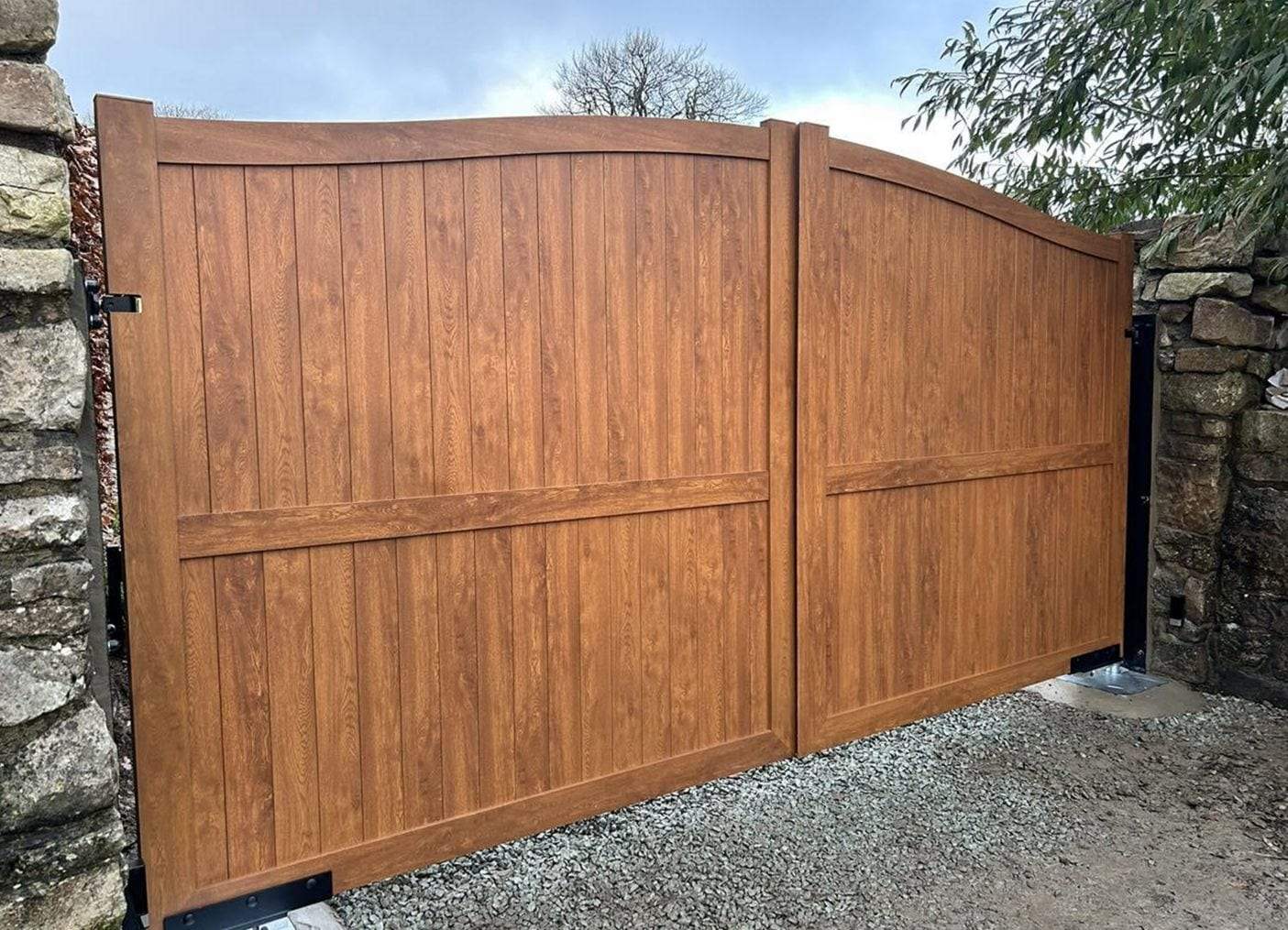
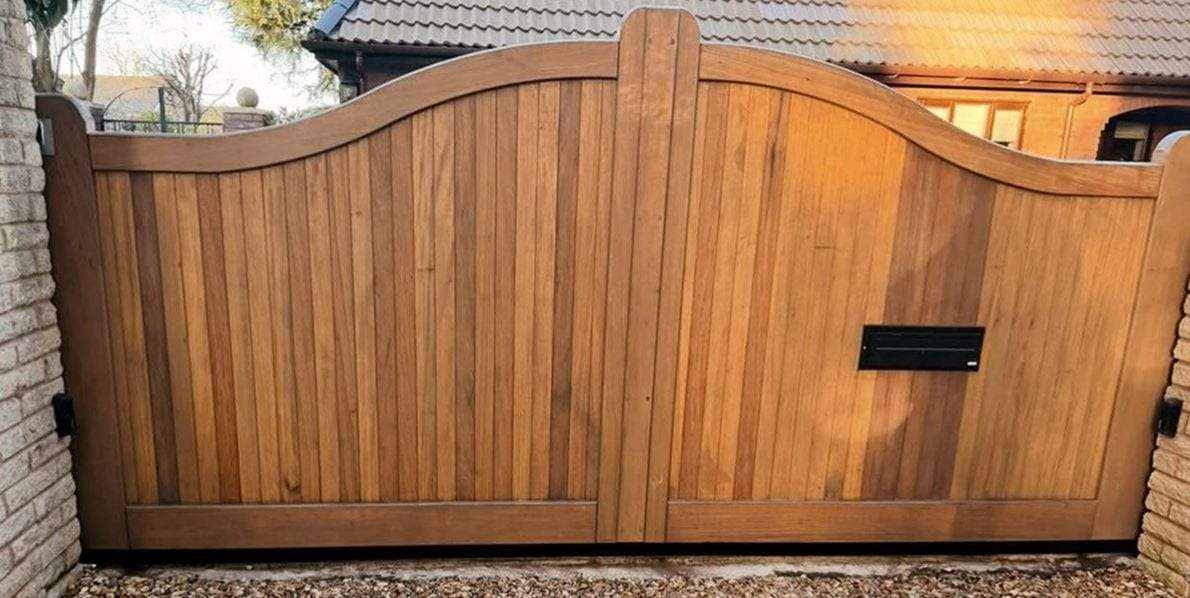
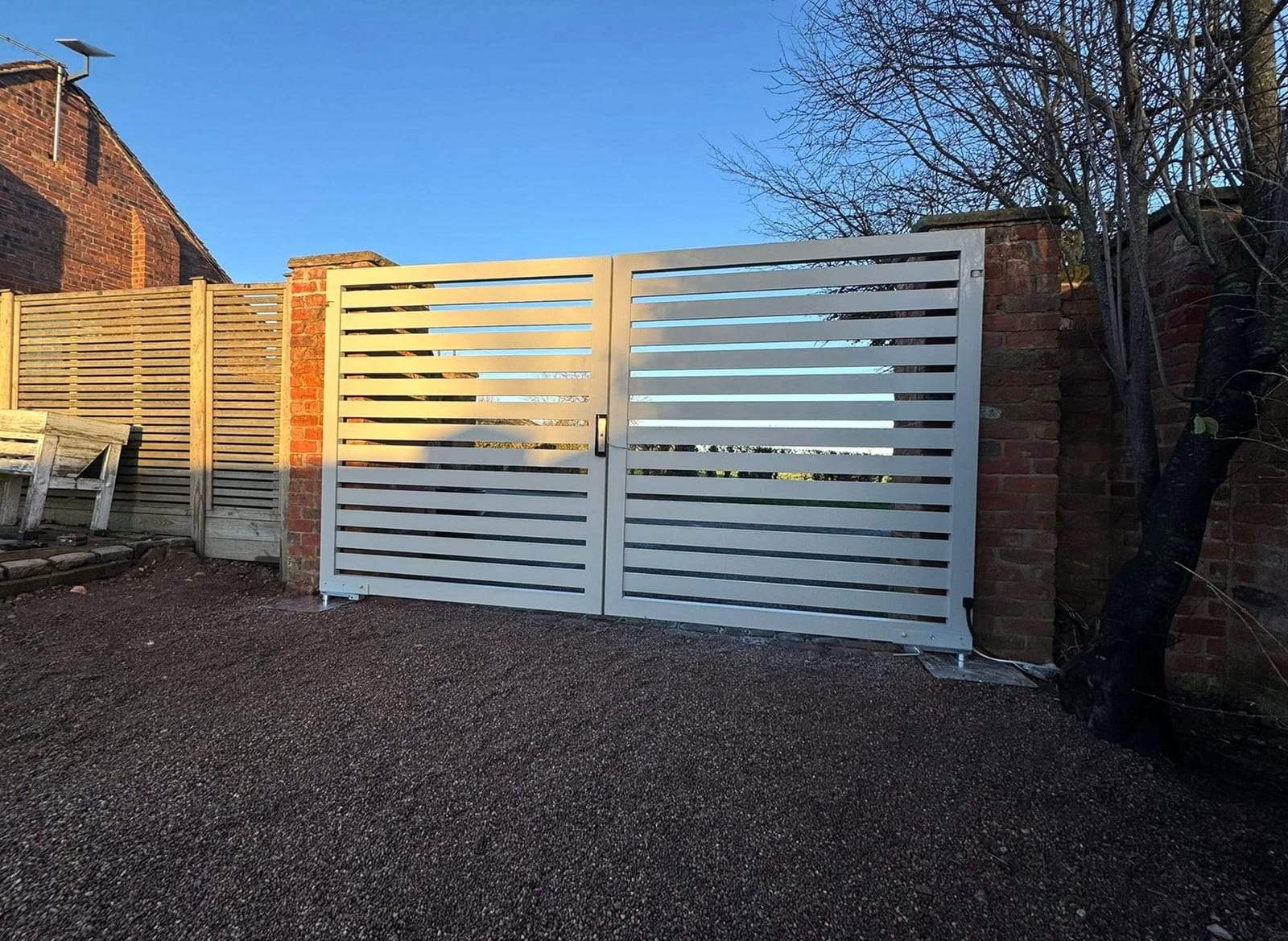
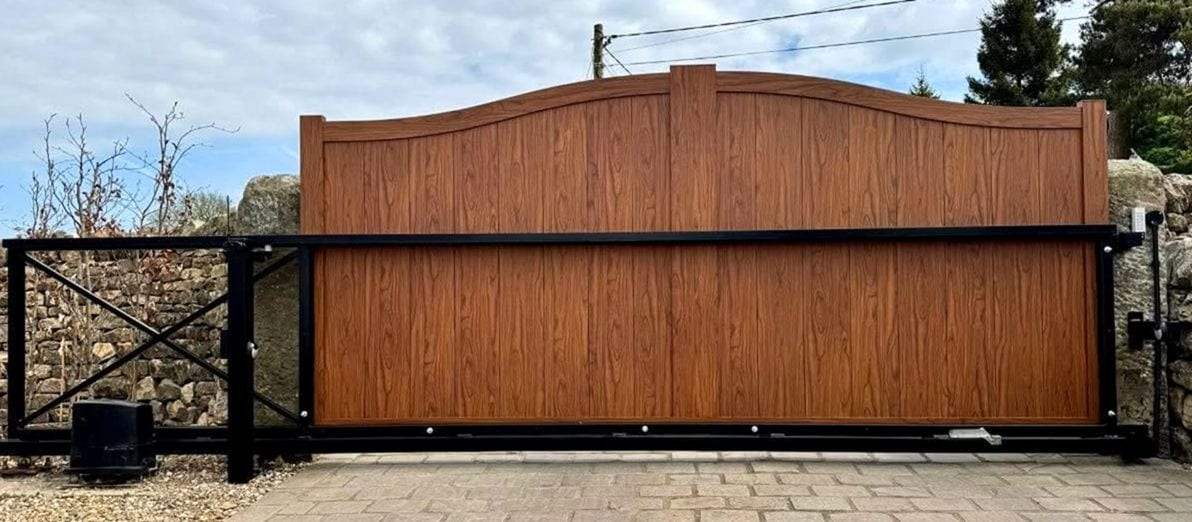
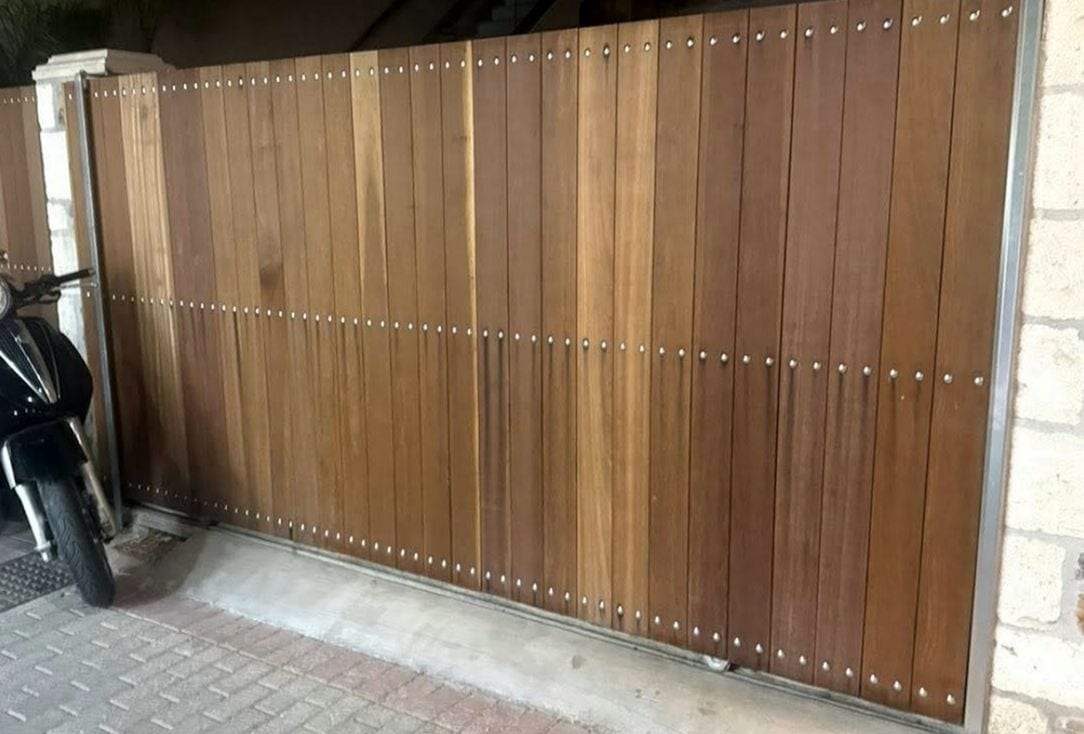
From our gallery: solid metal panels, woodgrain finishes and natural hardwood.
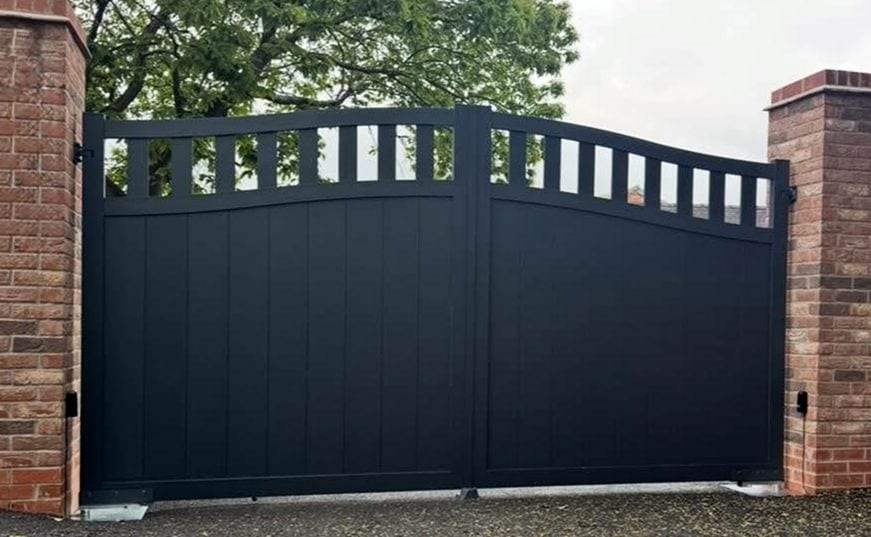
Material questions
Which gate material lasts longest near the Gulf?
Aluminum, for most homes. It does not rust, so salt spray mostly affects the powder coat, which keeps its color for years if the gate is rinsed now and then. Pair it with stainless or coated hardware: within sight of the water a stainless hinge pin will far outlast a plain steel one. Iron and steel can work too, but only with a well-kept coating and regular touch-ups.
Can I get the look of wood without the upkeep?
Yes. Aluminum gates can be finished in woodgrain powder coat, which gives the warm look of timber with the upkeep of aluminum, much like the woodgrain finish in the second photo above. Real hardwood is beautiful too, as the hardwood gates in the same section show, but in our sun and rain it needs resealing regularly to stay that color.
Does my HOA care which material I use?
Often. Many associations limit materials, colors and how solid a gate may look from the street. Check the architectural guidelines first; we match the design to them and can provide product details for the application.
Related pages
Not sure which material suits your house?
Call Declan. Tell us how far you are from the water and what your HOA allows, and we will tell you plainly what we would choose and why.