
Seasonal Gate Maintenance Guide
Southwest Florida has no freezing winters to worry about, but it has everything else: salt, sun, sand, daily summer storms and hurricane season. A few checks at the right time of year keep a gate out of trouble.
Our year, from a gate's point of view
The National Weather Service counts Southwest Florida's rainy season from about May 15 to October 15, and roughly three-quarters of the year's rain falls in that window, mostly in afternoon thunderstorms with plenty of lightning. The Atlantic hurricane season runs from June 1 to November 30. The rest of the year is the dry season: sunny, breezy and busy, when many seasonal residents are in town.
For gates, that means two different kinds of wear. The wet months bring water, surges and rust; the dry months bring sand, dust and heavy use. Salt air works all year, and harder the closer you are to the Gulf. The table below sets out what to watch in each part of the year.
Season by season
| Season | Months | What it does to a gate | What to do |
|---|---|---|---|
| Dry season | November to April | Sand and dust build up in tracks and on hinges; sprinklers run more and soak keypads and sensors; seasonal residents are back and gates work hardest | The best time for a full service visit and for new gate projects, with dry ground for footings |
| Before the rains | May | The last calm weeks before storm season; batteries and surge protection are about to be tested | Test the backup battery, check surge protection, clear drains around underground operators, trim plants away from photo eyes |
| Wet season | Mid-May to mid-October | Afternoon storms bring lightning surges and standing water; rust spots bloom; weeds and vines grow over sensors and tracks | Keep control boxes sealed and dry, watch for rust at hinges and welds, wipe photo eyes, keep drains clear |
| Peak hurricane months | August to October | High winds load solid gates and hinges; long outages drain batteries; storm surge and flooding reach low operators | Have a storm plan for the gate (below); after a storm, inspect before running it |
The five-minute monthly check
- Watch one full cycle. Listen for grinding or clunks and look for jerky movement or a leaf that bounces at the end.
- Test the safety reversal. With the gate closing, wave a box through the photo-eye beam: the gate should stop or reverse.
- Wipe the photo eyes and clear webs, ant trails and plants around them.
- Rinse salt off the gate and hardware with fresh water, especially near the coast.
- Clear the path: sand and leaves from slide tracks, fronds and mulch from under swing leaves.
- Look at the control box: lid closed, seals in place, no ants or water inside.
When a storm is coming
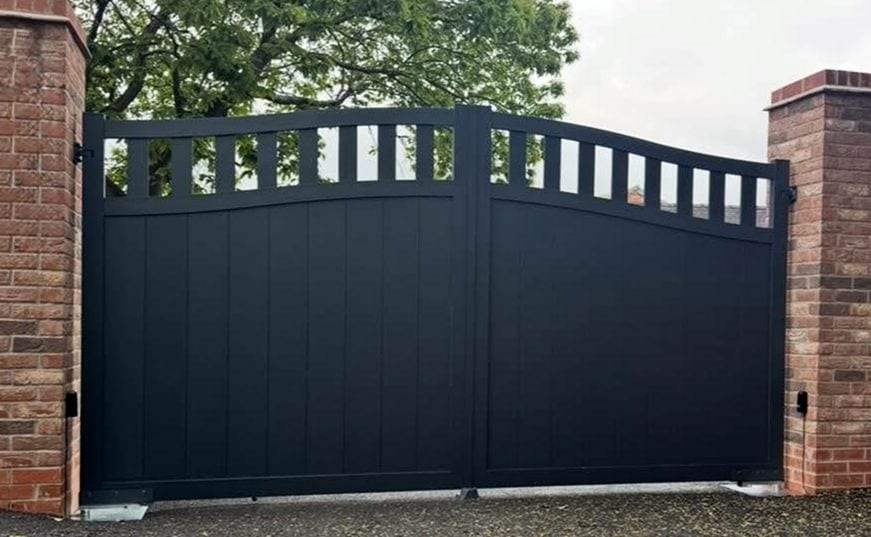
Follow your operator maker's storm instructions where you have them. In general, gate makers advise securing the gate so the wind cannot move it, and cutting its power.
- Decide open or closed before the storm, and remember that a closed gate must still let you and emergency crews in afterwards.
- Secure the leaves or panel fully open or fully closed with a chain or drop rods, so they cannot swing or slam.
- Switch off the power to the operator and the battery, and close and fasten the control-box lid.
- Know your manual release, and keep its key somewhere you can find it in the dark.
- Move loose items such as bins and planters away from the gate so they do not become projectiles.
After a storm
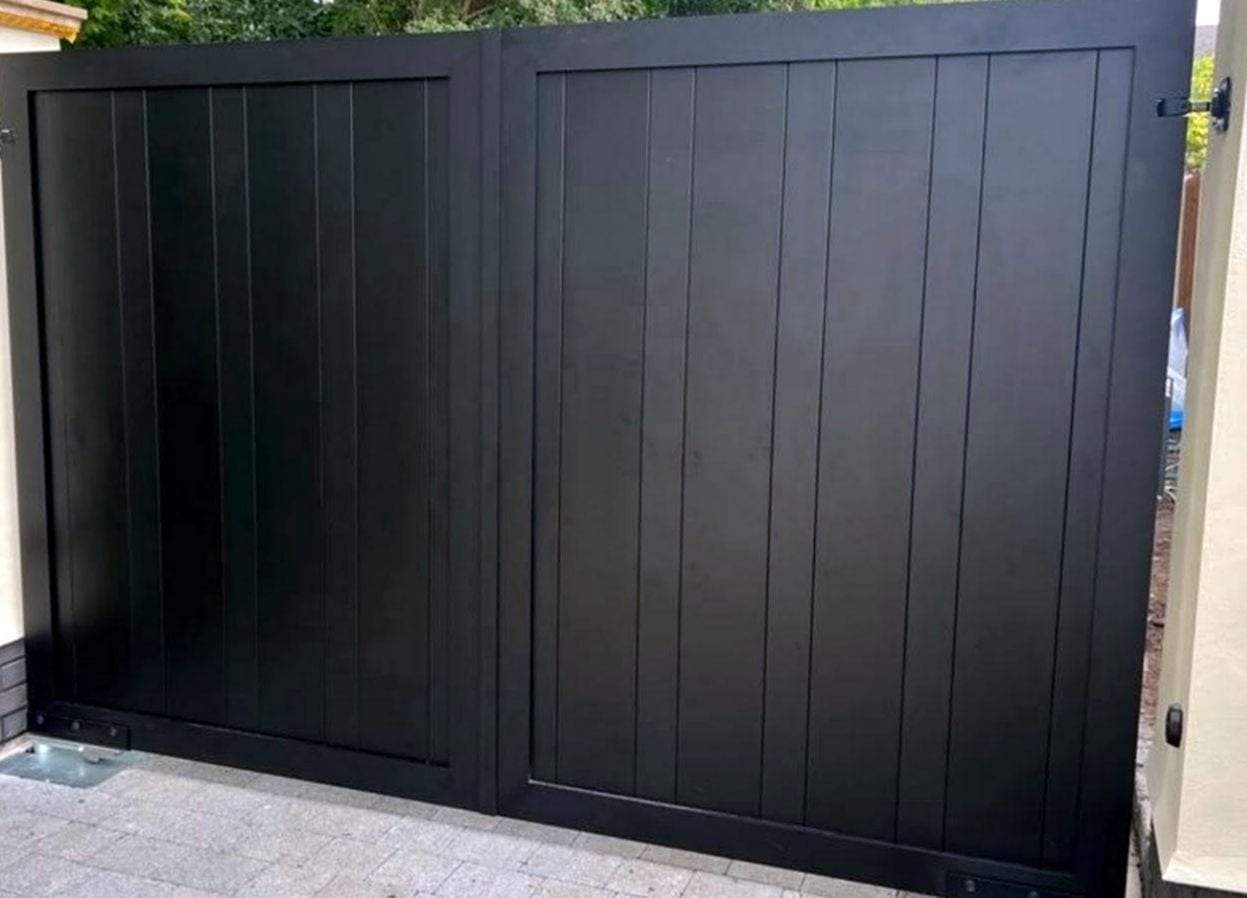
- Look before you run it: bent leaves, loose hinges, a leaning post, debris in the path or track.
- Check for water in the control box and in underground operator boxes; if there is any, leave the power off and call.
- Restore power, then run one cycle while you watch, and test the safety reversal.
- Expect a flat battery after a long outage; give it a day to recharge, and have it tested if the gate stays slow.
Before you leave for the summer
A gate that sits for months in the heat and rain can have problems waiting for you in the fall.
- Book a service visit in the spring, so worn parts are replaced before the wet season.
- Leave clear instructions and a way in for whoever checks the house, and turn off codes nobody needs while you are away.
- Think about app access if you want to let in a landscaper or an inspector from up north.
- Seal the control box against ants and water, and make sure the battery and surge protection are in good shape.
Maintenance questions
How often should a gate be serviced?
For a household gate, once a year is a sensible minimum, and twice a year is better within a few miles of the Gulf or for a gate that opens many times a day. Community and business gates usually need visits every one to three months; the commercial page shows typical schedules. Between visits, the five-minute monthly check on this page catches most problems early.
What should I use to lubricate hinges and rollers?
Follow the gate and operator makers' instructions where you have them. In general, a lubricant that does not attract sand works best here: a dry silicone or PTFE spray for tracks and rollers, and a water-resistant grease for hinge pins with grease fittings. Avoid heavy oil on slide-gate tracks, which turns sand into grinding paste. Leave the operator's gears and electronics alone unless its manual says otherwise.
How long does a gate backup battery last?
Usually a few years, and less in a hot control box that sits in the sun all summer. Batteries tend to fail when you need them, in a long outage, so we test them on every visit and before hurricane season. If your gate slows down or struggles more than usual, the battery is one of the first things to check.
Related pages
Want us to do the checking?
Book a maintenance visit with Declan: we go over the whole gate system, test the safety devices and the battery, and tell you what is wearing before it fails.